
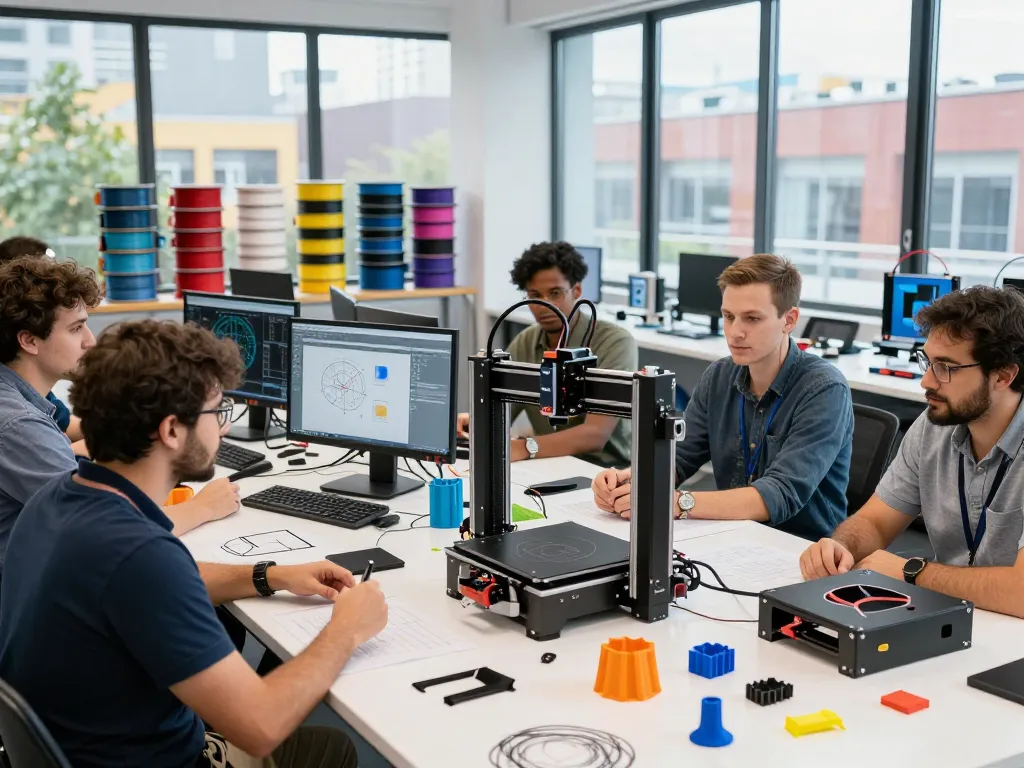
Understanding 3D Printing Technology
3D printing, also known as additive manufacturing, has revolutionized the way we think about production, design, and innovation. As we delve into the intricacies of 3D Printing, it’s essential to grasp the fundamental concepts, the history it has forged over the decades, and its wide-ranging applications across various industries. This technology allows for the creation of complex geometries that traditional manufacturing methods often struggle to achieve. From prototypes to end-use products, 3D printing has become a crucial component in modern manufacturing.
What is 3D Printing and How Does It Work?
At its core, 3D printing is the process of creating three-dimensional objects from a digital design. This is accomplished by layering materials—plastics, metals, or even living cells—based on a Computer-Aided Design (CAD) model. The essence of 3D printing lies in its ability to produce items quickly and efficiently, reducing waste and expediting the prototyping process. The typical workflow begins with the creation of a digital model, followed by translating this model into a format suitable for 3D printing, often utilizing slicing software to make the design printer-ready.
The Evolution of 3D Printing: Key Milestones
3D printing has come a long way since its inception in the early 1980s, when Charles Hull developed the first stereolithography machine. Here are some pivotal moments in its evolution:
- 1984: The birth of stereolithography, enabling the first-ever 3D-printed object.
- 1990s: Introduction of various other printing techniques such as Fused Deposition Modeling (FDM) and Selective Laser Sintering (SLS).
- 2005: The emergence of open-source 3D printing, allowing hobbyists and developers to innovate freely.
- 2010 onwards: The rise of consumer 3D printers making the technology accessible to the general public.
Common Applications of 3D Printing Across Industries
3D printing has penetrated various sectors, showcasing its versatility. Key applications include:
- Aerospace: Lightweight components and complex designs are produced to enhance fuel efficiency.
- Healthcare: Custom prosthetics and implants tailored to individual patient needs.
- Automotive: Rapid prototyping of parts, leading to faster innovation cycles.
- Architecture: Scaled models created quickly for client presentations.
Benefits and Challenges of 3D Printing
Advantages of Adopting 3D Printing in Manufacturing
The integration of 3D printing into manufacturing processes offers numerous advantages:
- Cost Efficiency: Reduces material waste and lowers production costs, especially for low-volume manufacturing.
- Customization: Facilitates the production of bespoke products tailored to specific customer requirements.
- Speed: Significantly decreases the time from design to production, allowing businesses to respond rapidly to market needs.
- Complex Designs: Enables the manufacture of complex geometries that would be impossible or prohibitively expensive to produce with traditional methods.
Challenges Faced by Businesses Implementing 3D Printing
Despite its benefits, organizations may encounter several challenges when integrating 3D printing:
- Material Limitations: Not all materials are suitable for 3D printing, which can restrict design options.
- Technical Expertise: Requires skilled personnel capable of designing and operating 3D printers.
- Regulatory Hurdles: In industries such as healthcare, strict regulations can complicate the adoption of 3D-printed products.
Cost Analysis: Is 3D Printing Worth the Investment?
When evaluating the cost of 3D printing, it’s crucial to factor in the expenses related to hardware, materials, maintenance, and training. A cost-benefit analysis will help organizations determine whether the potential savings and efficiencies gained justify the initial outlay. In many cases, particularly in prototyping, companies find that the investment pays off considerably.
Materials and Techniques in 3D Printing
Popular Materials Used in 3D Printing
Various materials are employed in 3D printing, each with unique properties:
- Plastics: The most commonly used material, encompassing types like PLA, ABS, and PETG.
- Metals: Used in industries such as aerospace; aluminum and titanium are favorites.
- Composites: Materials infused with fibers or other agents to enhance strength and durability.
Overview of Printing Techniques and Their Applications
Numerous techniques are utilized in 3D printing, including:
- Fused Deposition Modeling (FDM): A popular method for hobbyist printers and prototyping.
- Stereolithography (SLA): Known for high-resolution prints, often used for jewelry and dental applications.
- Selective Laser Sintering (SLS): Best for high-strength parts, commonly used in aerospace and automotive.
Future Trends in 3D Printing Materials
As the technology advances, the development of new materials is promising. Innovations are focusing on bio-compatible materials for healthcare applications and sustainable materials derived from renewable resources. This not only enhances capabilities but aligns with global sustainability efforts.
Real-World Case Studies and Implementations
Success Stories of Companies Using 3D Printing
Numerous companies have transformed their operations through 3D printing, such as:
- GE Aviation: Utilizes 3D printing for jet engine components, reducing part weight and improving performance.
- Adidas: Created custom shoe soles using 3D printing technology, enhancing personalization for customers.
Lessons Learned from Failed 3D Printing Projects
Not all 3D printing initiatives are successful. Lessons from failures often revolve around:
- Overestimating Capabilities: Some businesses misjudge the technology’s potential or fail to research material compatibility.
- Inadequate Training: Lack of training for staff can lead to ineffective implementation and wasted resources.
Innovative Startups Revolutionizing the 3D Printing Space
Startups are at the forefront of innovation in this field, offering solutions from on-demand manufacturing to new materials. Companies like Carbon and Desktop Metal are pushing the boundaries, making significant strides that could redefine industry standards.
Future of 3D Printing: Predictions for 2026 and Beyond
Emerging Trends Shaping the Future of 3D Printing
As we look to the future, several trends are expected to shape the landscape of 3D printing:
- Integration with AI: Automation and AI will enhance design processes and production efficiency.
- Increased Material Variety: Research into new materials will expand applications across different fields.
The Role of AI and Automation in 3D Printing
The integration of AI will allow for smarter design processes, enabling printers to optimize for material usage and speed while reducing waste. Furthermore, automation will streamline workflows, making the technology more accessible for smaller organizations.
Your Guide to Staying Ahead in 3D Printing Technology
To remain competitive, businesses must stay informed about advancements in 3D printing technology. Engaging with industry communities, attending seminars, and investing in training are all crucial steps to harnessing its full potential.
How much does 3D printing cost?
Costs can vary widely depending on scale and complexity, but basic estimates suggest hobbyists spend between $300 to $1,000 on printers, while professional setups can range from $5,000 to $50,000 or more.
What industries benefit the most from 3D printing?
Industries such as aerospace, healthcare, automotive, and consumer products significantly benefit from the efficiency and customization that 3D printing offers.
Can 3D printing be used for prototyping?
Absolutely. Prototyping is one of the primary applications of 3D printing, enabling rapid iterations and testing of designs before moving to full production.
What materials can be used in 3D printing?
A wide range of materials is suitable for 3D printing, including various plastics, metals, ceramics, and even biological materials for specific applications.
How is 3D printing impacting traditional manufacturing?
3D printing is transforming traditional manufacturing by enabling more agile production processes, reducing lead times, and facilitating asynchronous supply chains, ultimately leading to a more responsive manufacturing environment.