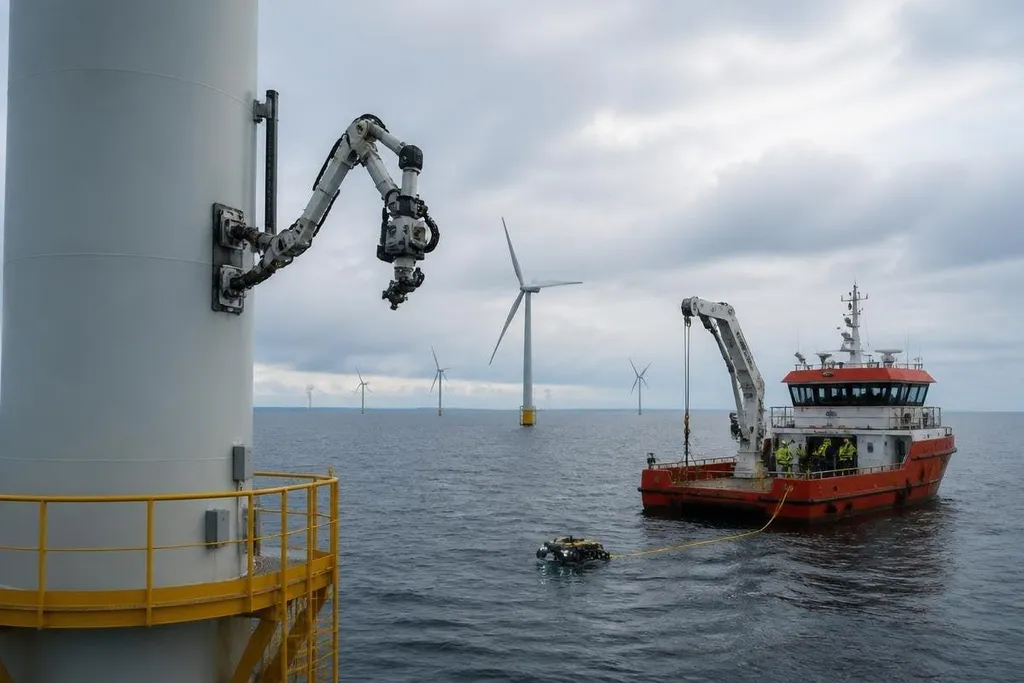
Offshore wind turbines sit far from shore, where waves, wind, and distance can delay basic maintenance. Robots could inspect blades, move tools, and check underwater structures while crews stay on a service vessel or remain on land.
Quick read
- Blade robots could inspect long composite surfaces without sending a technician over the side.
- Drones could check external damage before a vessel makes the trip.
- Underwater robots could examine foundations, cables, and marine growth below the surface.
Where robots could work
The first jobs are likely to involve inspection. A small drone could fly around a turbine and record images of the blades, nacelle, tower, and nearby sea surface. Software could then compare new images with older ones to find cracks, loose panels, or changes in paint.
That process would help a maintenance planner decide which turbine needs a close visit. A crew could bring the correct tools and spare parts instead of sending a vessel to investigate an unclear problem.
Blade work is harder. The blades are long, curved, and exposed to strong wind. A climbing robot could attach itself to the blade surface with wheels, magnets, suction, or a cable system, depending on the material and shape.
The robot would need to move slowly while carrying cameras or other inspection tools. It might also remove surface dirt or apply a small repair layer, but those jobs need careful control because a mistake on a blade can affect the turbine's balance.
Underwater checks
The part below the waterline brings a different set of problems. An underwater robot, often called a remotely operated vehicle, can carry cameras and lights while an operator controls it from a vessel.
It could inspect the foundation for corrosion, cracks, damaged coatings, and marine growth. It could also check the area around subsea cables, where movement on the seabed may expose or damage the cable.
Autonomous underwater robots could cover a planned route with less direct control. Their navigation system would need to work without satellite signals, which do not reach beneath the water. That makes position tracking and recovery plans as important as the camera itself.
What still needs a human
A robot can collect useful evidence, but a person still needs to judge what the evidence means.
Image software may flag a mark on a blade, yet a technician must decide if it is dirt, harmless surface wear, or damage that needs repair.
Weather adds another limit. A drone may have to stay grounded in strong wind, while a climbing robot could lose contact with a wet or damaged surface. An underwater robot can also lose its route if currents push it away from the foundation.
Safety matters too. The turbine may need to stop before a robot approaches the blades. A vessel crew must know where the robot is, how to recover it, and what happens if its cable breaks or its battery runs low.
Those safety details belong in the cost record too. Offshore robot reports from Robot24.com can place a named vessel, trial date, recovery plan, and inspection task beside claims about savings. The calculation starts with the trips a robot may reduce and the work a crew still must do.
The cost question is still open. A robot may reduce vessel trips, but the full calculation includes purchase price, control software, repairs, crew training, insurance, and time spent checking robot-collected data. Without those figures, no fair claim about savings can be made.
What to test first
An offshore wind operator assessing a robot should check the task in this order:
- Start with inspection: choose a job where images can show a clear result.
- Set weather limits: record the wind, rain, wave, and visibility conditions that stop work.
- Plan recovery: define how the team will retrieve a drone, crawler, or underwater robot after a fault.
- Measure crew time: include launch, control, review, cleaning, and transport in the trial record.
- Compare findings: have a technician check robot results against a standard inspection.
The strongest early use is likely to be routine data collection before a human repair visit. I'd back systems that reduce risky trips while leaving damage decisions with trained technicians. The open test is whether they can keep working through salt, spray, vibration, and poor weather for an entire maintenance season.